Every conversation builds a brain
Science-backed conversation frameworks for parents of kids aged 2 to 8.
We're losing 194 conversational turns a day.
Not to bad parenting.
To time.
The average three-year-old in Australia loses an estimated 1,100 words and 194 conversational turns a day to screens. That's not a guilt trip, it's just the maths of a busy household.
Every back-and-forth exchange between you and your child helps build the neural connections behind language, thinking skills and the ability to regulate emotions. Researchers call it the 'serve and return', and it's one of the most studied mechanisms in early brain development.
Here's the part that actually matters: a meta-analysis of 52 studies found that the quality of parent-child talk predicts language development better than the quantity of words spoken.
You don't need more hours. You need better questions.
Wundlings is built on that research, plus the "serve and return" work coming out of Harvard and MIT on how back-and-forth exchanges shape a developing brain.
Sources: Brushe, University of Adelaide, Language in Little Ones Study. Anderson et al., 2021. Center on the Developing Child, Harvard University.
A shortcut to
better conversations,
not another thing to feel behind on.
Wundlings turns the research into something you can actually use
at the dinner table, in the car, or in the ten minutes before bedtime.
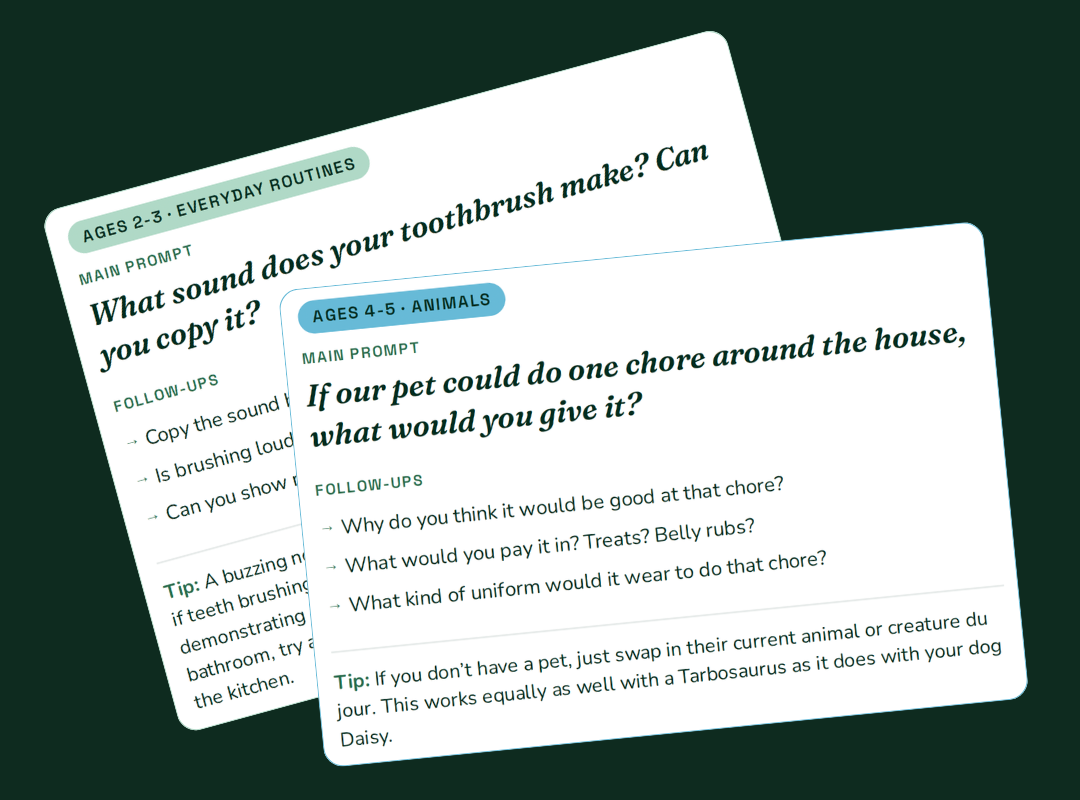
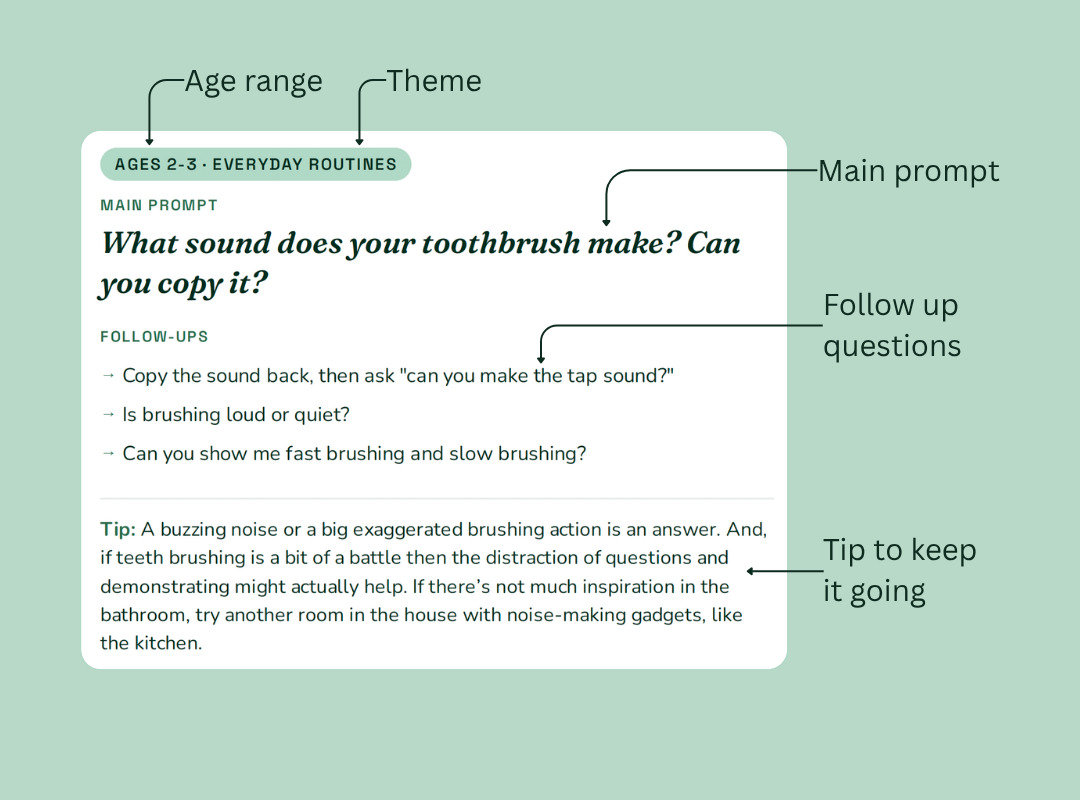
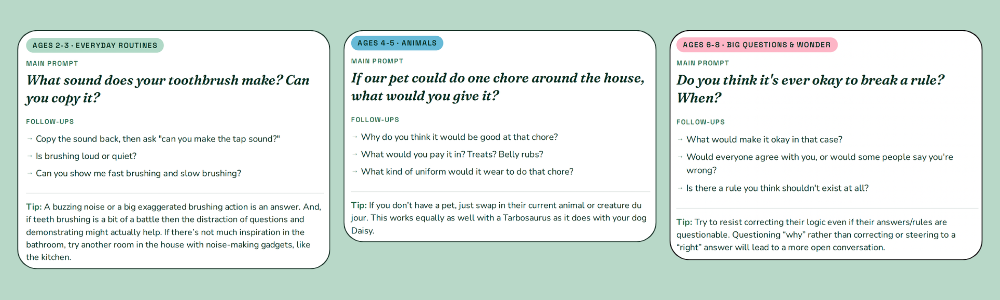
Each framework contains a main prompt, follow-ups and a tip to keep the conversation going, so you're never stuck between "how was your day?" and "good."
Right now, it's a PDF you can start using today.
Start tonight. It's free.
3 prompts to try today. What will your little one say?
Want more than a taste?
Get the Wundlings deck. 40 conversation frameworks, $7.99
Forty research-backed conversation frameworks across the ages and stages from 2 to 8. The frameworks all contain a main prompt, follow-ups, and a tip to keep it going, so you're never stuck for words.
Built by someone in the trenches with you.
I'm Pippa, a Sydney-based mum and the person behind Wundlings.
I started Wundlings because I was hitting a wall with "how was daycare today". I knew there was more going on in that little head but I was just going about conversation all wrong.
I'm not a child psychologist, speech therapist or early learning specialist. I am a parent who went 10 pages deep on Google looking for questions to ask my daughter, and in between the random blogs and Facebook mum group posts, found the research that shows how important conversation is beyond decoding whether or not they had a good day at daycare today.
What I couldn't find was a digestible and easy to use tool so I started building it.
Wundlings is developed by me, backed by research, and tested on one very honest three-and-a-half-year-old critic.
Not into PDFs?
The app is next, coming in 2027, with more frameworks that are filterable, searchable and saveable, And, input from early learning and development specialists to gold star everything before it goes live.
Join the waitlist and you'll be the first to know when it lands.